From labor rooms to lineups
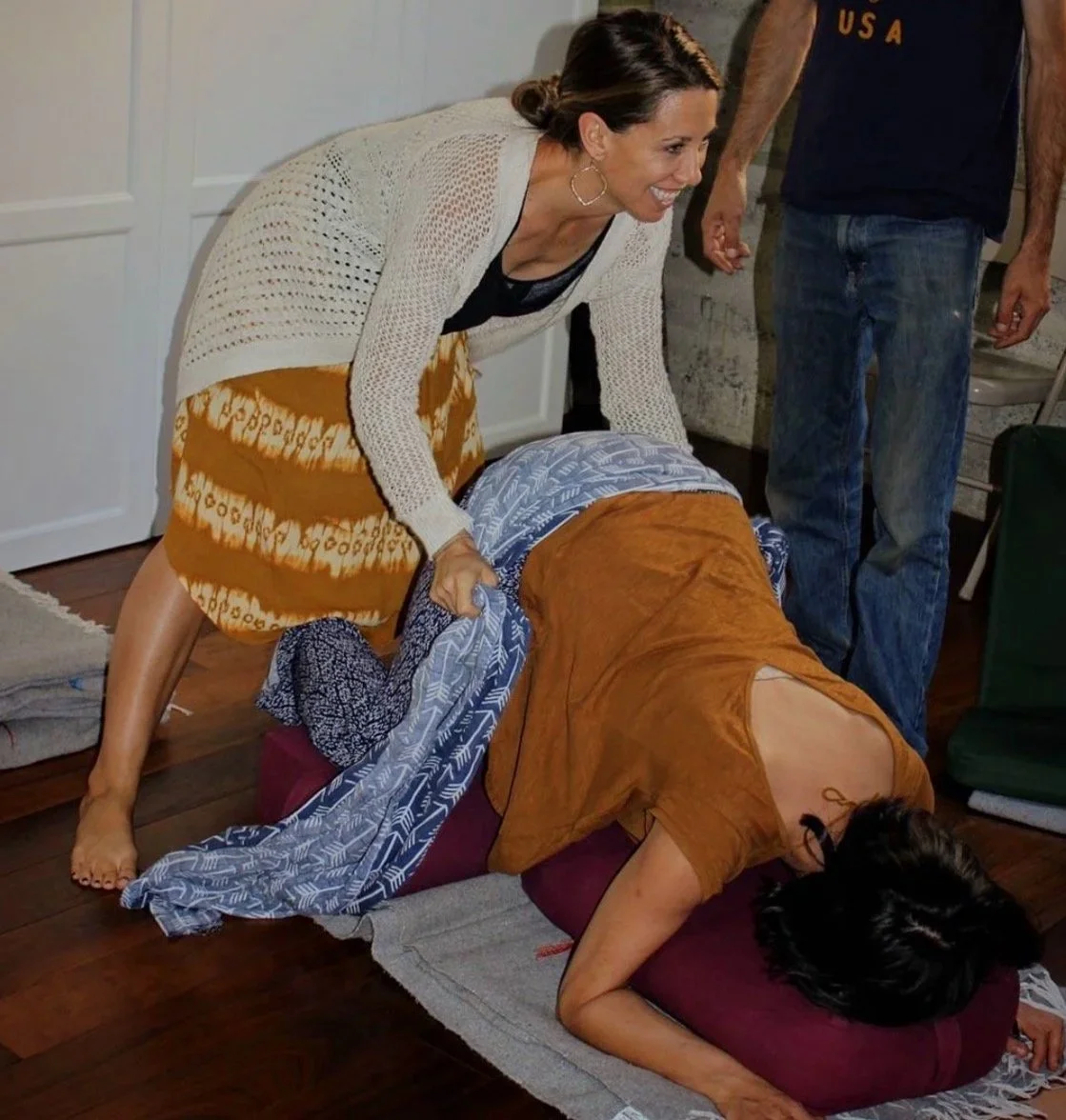
Demonstrating the many uses of a Rebozo in labor in order to allow the waters, baby, and hips to work together. Photo Credit: Deidre Lorenzo
My story doesn’t start with surfing while pregnant.
In fact, I never did.
Out of three pregnancies, I floated in the ocean only a couple of times. I was too sick to consider getting off the couch, let alone paddling out. But that wasn’t the real reason. It was because I had never seen imagery of pregnant women surfing. It never occurred to me that it was an option.
I grew up with a deep connection to water. My dad was a pool-and-ocean person, endlessly swimming with my sisters and me, diving, pulling our legs underwater just to make us laugh. We weren’t a surfing family, but we were a water family. My first exposure to surf media during my teen years was in the early 90s, consisting of men on shortboards and women posed on the sand.
When I finally began learning to surf as a young adult along the beaches in Los Angeles, it was slow, awkward, and in a vacuum. There were no surf cams, no social media, no archive of beginners fumbling their way forward. I just tried and failed. Repeatedly. Eventually, life carried me north to Santa Cruz, and even though the ocean was everywhere — surfing still felt inaccessible. The culture was intimidating, home to some of the most notoriously localized spots in the U.S. The learning curve was steep. I started to believe that maybe surfing just wasn’t for me due to my lack of being competitive and physically combatitive.
Then pregnancy arrived, and with it, hyperemesis. I was violently ill, isolated, and depressed. At the time, there was very little community or documentation for women experiencing that level of sickness, let alone women staying physically active through pregnancy. Doctors recommended rest. Stillness. Compliance. I listened, because I didn’t know there were other ways. I hadn’t yet met women who bucked those “rules” and fought for better care. Sitting in doctor offices with binders of their own research. My eventual co-conspirators.
It wasn’t until after I had my first child that I saw something that cracked my assumptions open: a pregnant friend boogie boarding. She glided easily, joyfully, belly and all. I remember watching her from the sand, stunned. I remember thinking, Is that even safe?! Won’t she smash her baby? I worried for her, but more than that, I envied her. I realized how much I had missed. Not because I lacked strength or desire, but because I lacked examples.
Shortly after that beach day I began again as a surfer and was deep into birth work.
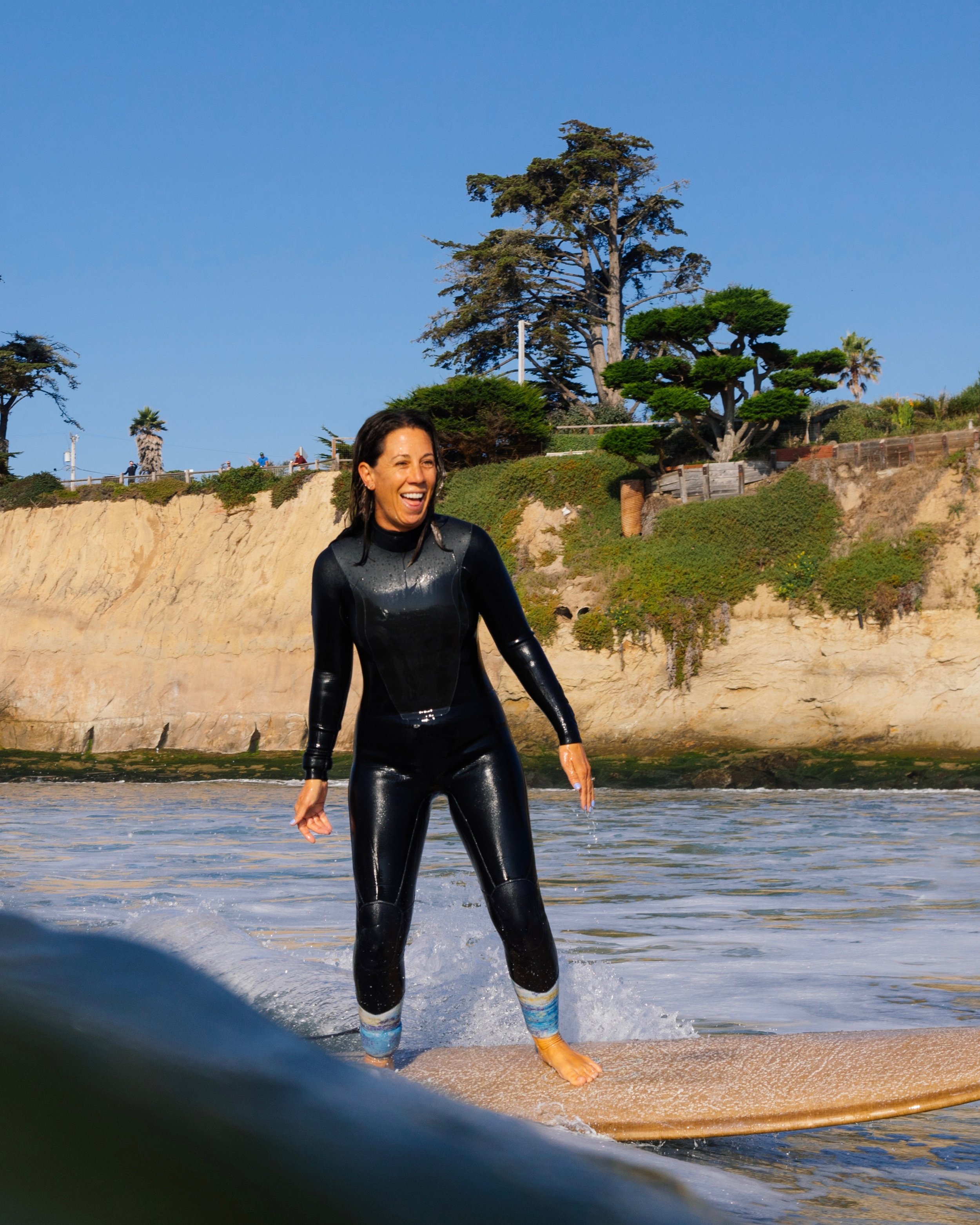
Photo Credit: Clara Mokri
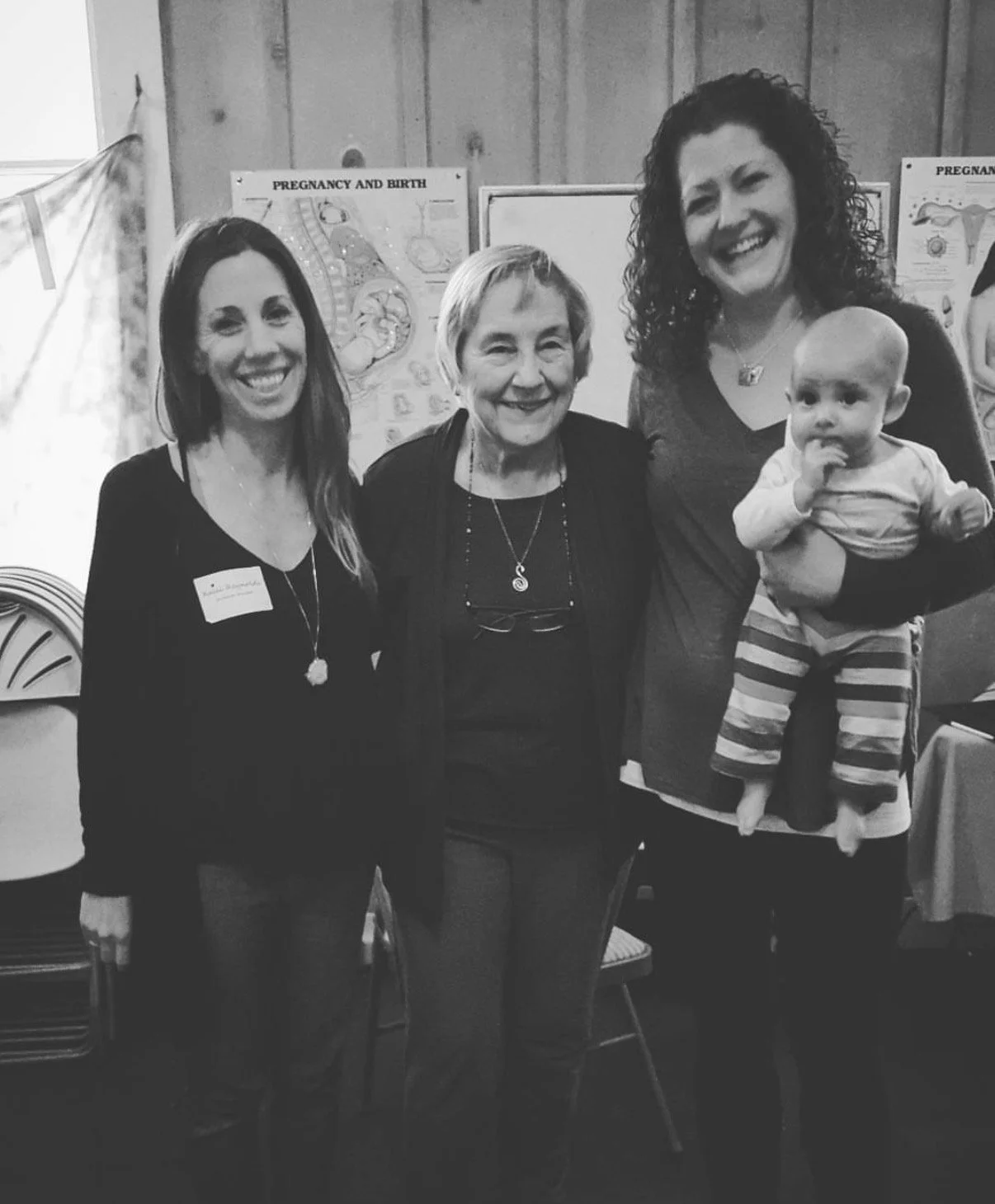
Meeting childbirth educator legend, Penny Simkin, with my birth worker bestie, Krystal Long & baby Dahlia
I trained as a birth doula, childbirth educator, and postpartum doula. I apprenticed with midwives. I spent years supporting women through labor, learning how deeply trust, autonomy, and access shape our experiences of birth. I learned that when women are given information, representation, and permission, they often surprise themselves with what they can do.
Years later, social media finally made visible what had always existed quietly: women surfing while pregnant. Not performing, not proving, simply continuing relationships with the ocean that already belonged to them.
Seeing those images landed in my body like an intrinsic truth.
If I had seen this earlier, my pregnancies might have felt different. I might have trusted my body more. I might have known that movement, joy, and play didn’t have to disappear the moment I became pregnant.
What struck me most was how similar surfing and birth really are.
Both require presence. Both move in waves and lulls. Both ask us to give in to nature’s will while staying mentally and physically attuned. No two experiences are ever the same, and access to a positive experience is often shaped by culture, privilege, and support — not capability.
Surf & Birth was born from these realizations. The internal resonance demanded from me an external record for women.
This project isn’t about encouraging anyone to surf while pregnant. It’s about documenting reality. About archiving stories that have been largely invisible. About giving women — surfers, mothers, birth workers — the gift of recognition.
When we see ourselves reflected, we make different choices. We trust ourselves differently.
I think often about a friend of mine, a woman I met during my third pregnancy. She was carrying her first baby and surfed regularly through her pregnancy with a steadiness and confidence that stayed with me. Seeing her surfing photos on social media felt astonishing. There she was on my screen: belly forward, board under her feet, joy and trust unmistakable. I remember staring at those images and thinking, How is she so free in her knowing of her body and the ocean?
That question never left me. And needing to be in the ocean never left me either. I would become a daily surfer and even more exciting, I would rekindle my love for photography —this time bobbing around in the sea with my camera like an otter with their favorite rock.
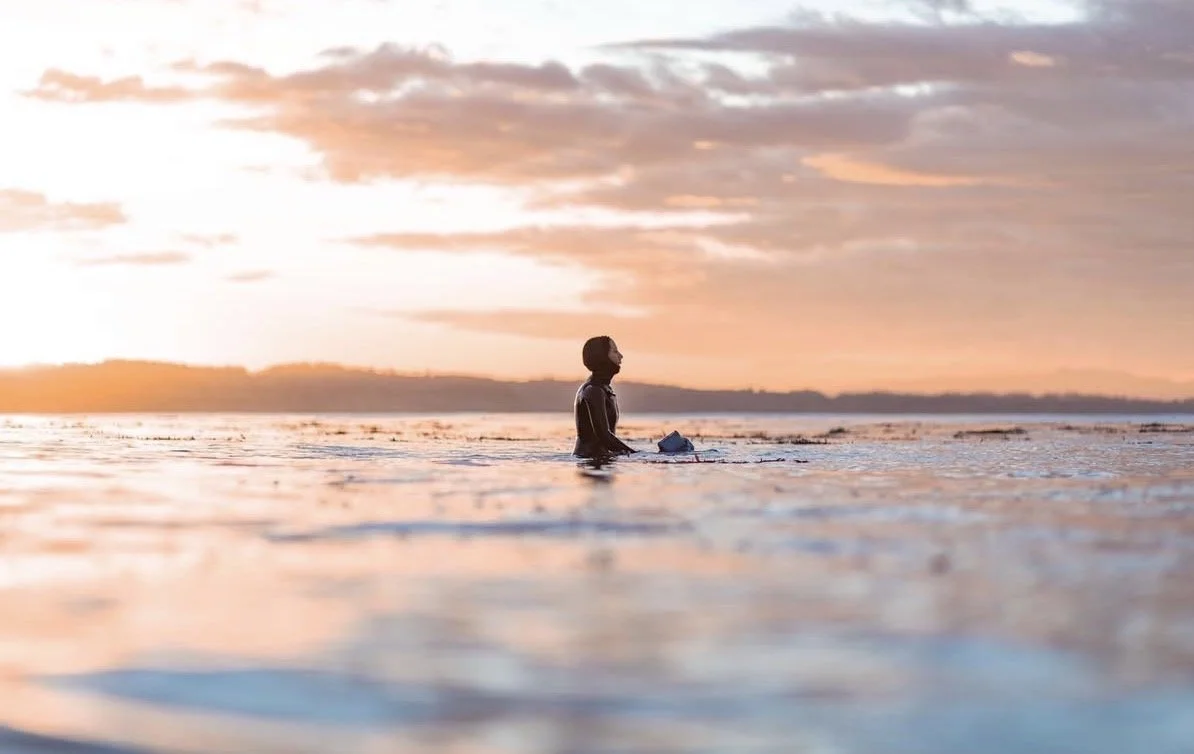
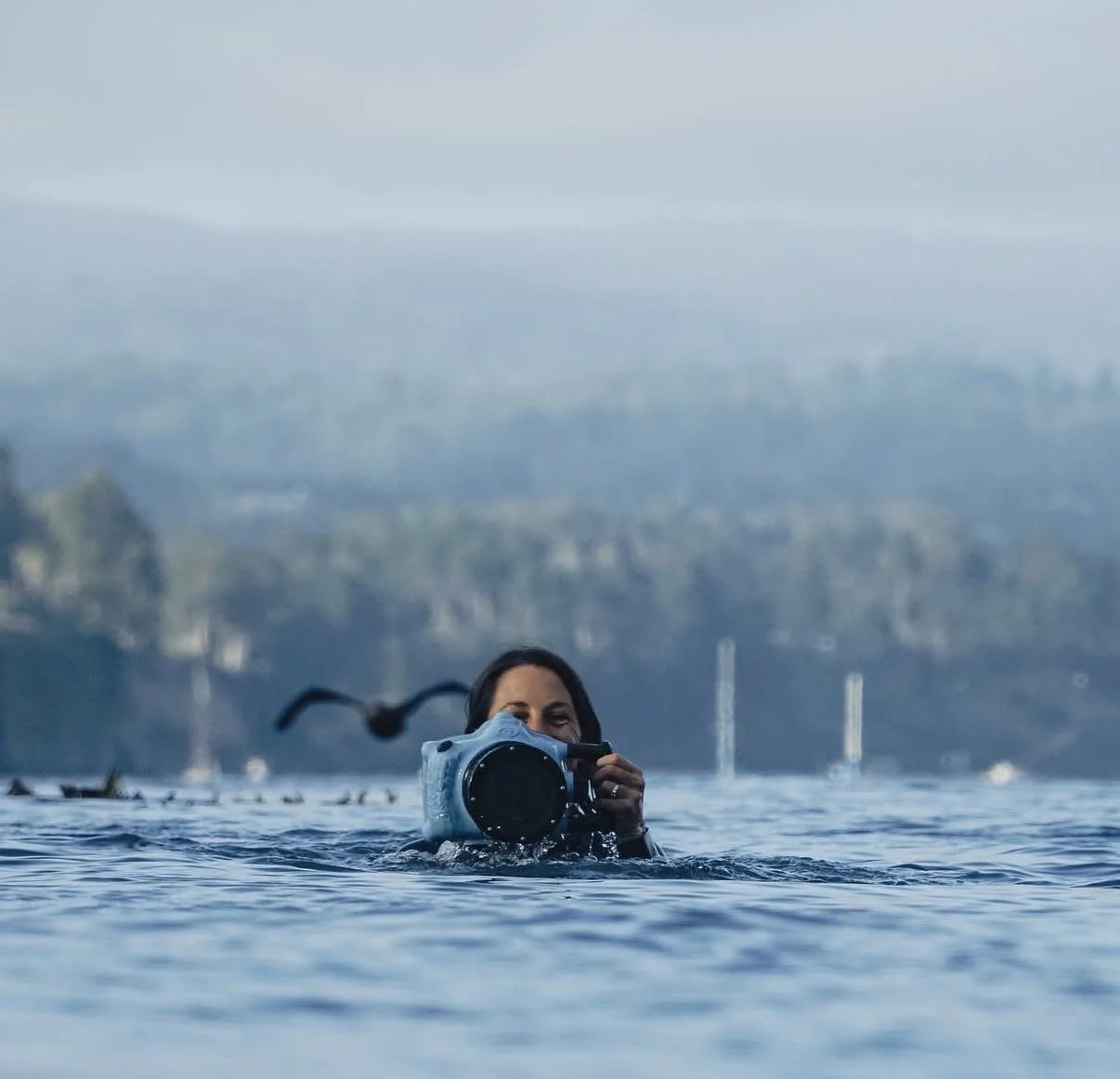
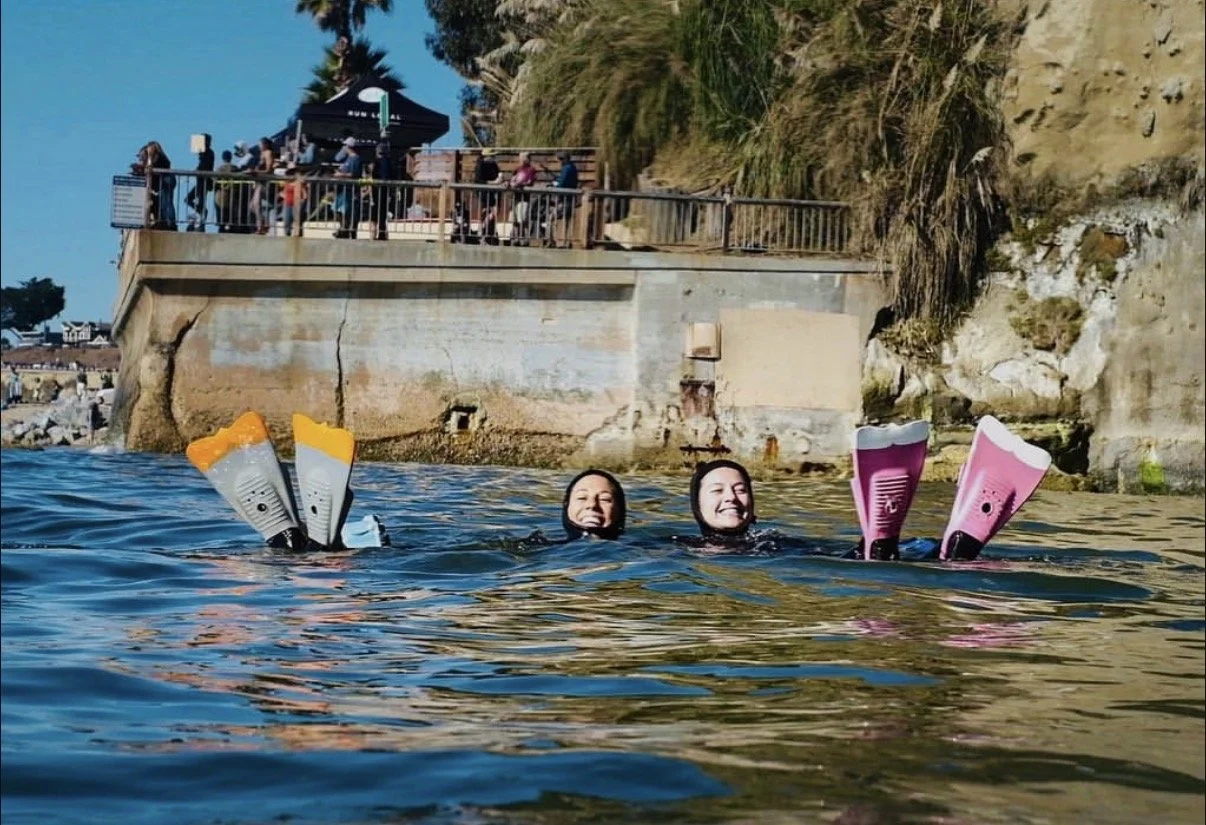
Sunrise photo credit: Mei-Li Restani. Floating with birds photo credit: Baker Carroll. Bobbing around with Me-Li photo credit: Nick Paz.
Now, I’m collecting images and stories from women who surf while pregnant and postpartum, building a living archive that reflects many women’s deep instinctual knowledge: this exists, and it matters.
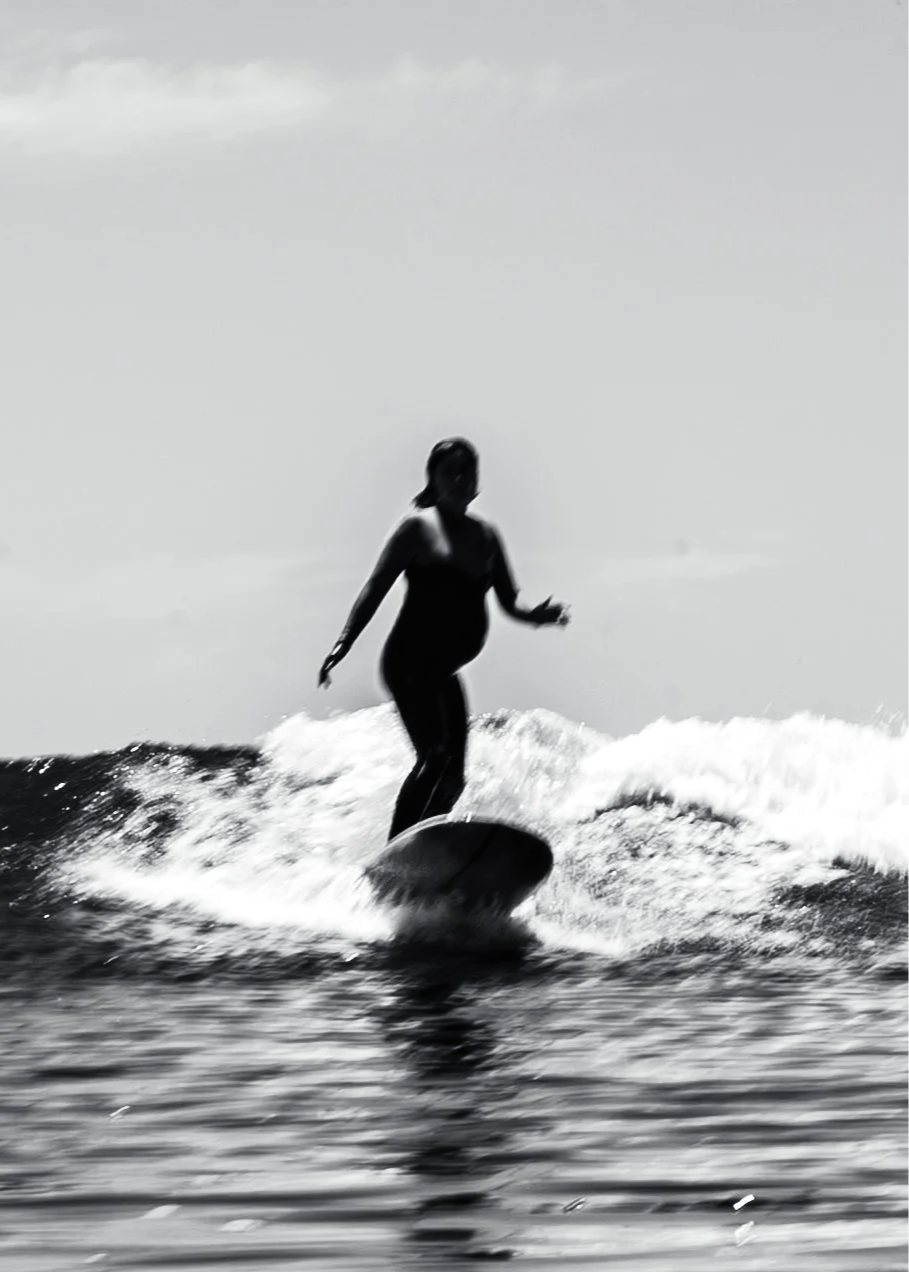
An anonymous mother enjoying one of her last surfs before meeting her baby on the outside. Photo Credit: Kaili Reynolds
It’s the resource I wish I’d had. Not so I would have done anything differently, but so I might have trusted myself more deeply.
Surf & Birth is an invitation: to see what’s already here, to honor the wisdom women carry in their bodies, and to remember that freedom, presence, and joy don’t disappear when our bodies change. Instinctually the volume actually gets turned up on how important it is to keep your fun.
A bonified Valley Girl, Kaili was born in West Hills CA, now known as Canoga Park. After living in 13 homes in various towns by the time she was 18, Kaili eventually settled into the coastal redwoods that is Santa Cruz, CA. She holds her B.A. in Community Studies & eventually shifted gears into birth work as a childbirth doula, educator, and student midwife. Now as a photographer she is applying her life lessons & education towards this future archive of women surfing pregnant.
